Skip to content



UK 2G / 3G Switch-Off 2025–2033: What Every Housing Manager Needs to Know
January 8, 2026
•4 minutes read
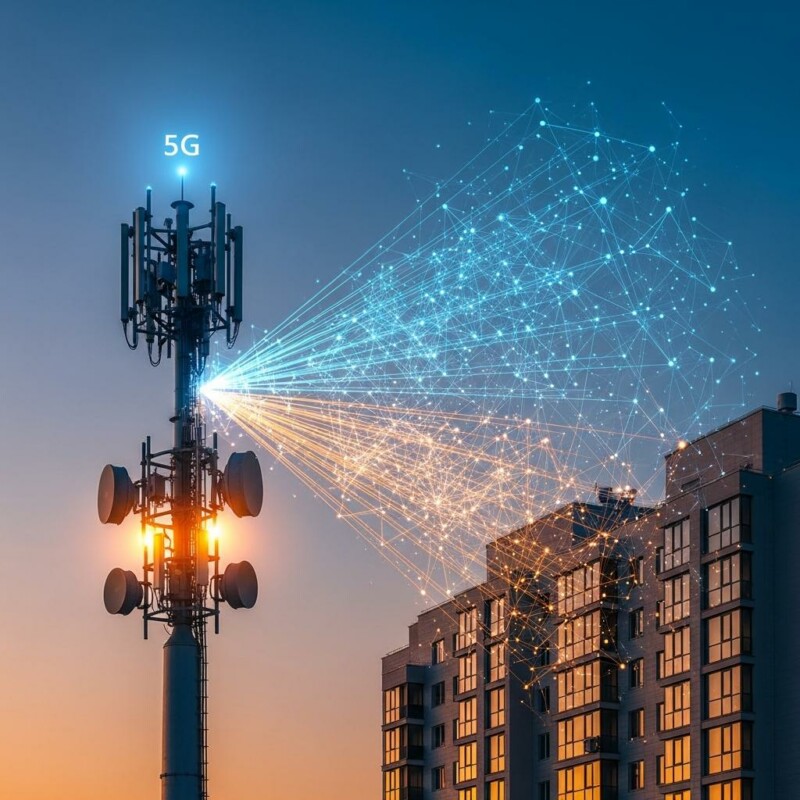
Mobile networks across the UK are shifting towards faster and more reliable technology. As part of this change, 2G and 3G services will be phased out between 2025 and 2033. For everyday users this shift will mostly go unnoticed, but for housing managers the impact can be significant, especially where connected building hardware and access control systems depend on older network standards.
Most modern devices now display 4G, 5G or similar connection labels, showing how far mobile technology has advanced. Older networks are being retired to free up spectrum for stronger 4G services, wider 5G coverage and future developments. A House of Commons Library report outlines the national plan to end both networks within this timeframe.
Beyond Phones: The Hidden Infrastructure Risk While the conversation often centers on mobile phones or intercom calls, the most critical impact of the network switch-off lies elsewhere. For housing providers, the risk is not usually in the personal devices residents use, but in the hidden building infrastructure—specifically the communication modules embedded within essential hardware.
Many existing systems rely on legacy 2G or 3G modems to communicate with the outside world. When these networks are retired, these devices will essentially go silent, creating significant technical and safety voids across an estate.
Critical Systems at Risk Housing managers must audit their stock for the following "invisible" dependents on 2G/3G connectivity:
- Life Safety Systems: Many older lift (elevator) auto-diallers and fire alarm communicators use these networks to connect to monitoring centers. If the signal drops, emergency calls could fail, and alarms may lose remote supervision or the ability to report faults.
- Telecare & Social Alarms: In sheltered housing, pendant alarms, fall detectors, and home monitoring equipment for vulnerable residents frequently utilize 2G/3G modems. A loss of connection here poses an immediate risk to resident safety.
- Security Infrastructure: This includes CCTV systems with SIM cards (often found on temporary scaffolding or site security), automated vehicle and pedestrian gates, standalone access control systems (distinct from standard door intercoms), and intruder alarms.
- IoT & Building Sensors: Property managers increasingly rely on low-cost IoT devices for water leak detection, energy metering, plant room monitoring, and legionella compliance. Because 2G was cheap and reliable, it became the standard for these sensors. Without an upgrade, these data streams will simply stop.
Operational and Management Consequences Failing to upgrade these modules before the switch-off triggers a domino effect of operational challenges:
- Loss of Visibility: When a device stops communicating, housing teams lose remote health checks, alerts, and system status reports. This forces a regression to inefficient, time-consuming manual checks to ensure compliance.
- Procurement & Budget Shocks: Many older devices are no longer supported. Upgrades may require full system replacements rather than simple module swaps, demanding complex coordination with multiple suppliers (lifts, alarms, telecoms) and unexpected budget reallocation.
- The "Last-Minute" Premium: If replacements are not planned now, housing providers face the chaos of emergency upgrades. This leads to urgent callout fees, supply chain shortages, and extended service downtime for residents.
Compliance and Liability Ultimately, this is a matter of compliance. If a life safety system fails to operate during an emergency due to network issues, housing providers face serious liability and insurance implications. Ensuring that lift standards, fire safety protocols, and telecare regulations are met requires immediate action to migrate these systems to 4G or 5G solutions.
Take Action: Check Your Infrastructure The best way to get ahead of the change is to review every connected device in the property. Identify which systems—from lifts to intercoms—still rely on 2G or 3G and plan your upgrades now to avoid emergency replacements later.
A Note for Intratone Customers: At Intratone, we stopped manufacturing 2G modules in March 2021. If you currently use the flashcall feature (mobile key) to open your gates, please note that this is being replaced by our new mobipass feature, which requires a 4G module to operate. It is vital that you check if your older equipment requires an update to remain compatible.
Limited Time Upgrade Offer: To support you through this transition, we have a special offer available on 4G module upgrades until the end of the year. If you would like support choosing future-ready hardware or need to verify your current module version, please reach out to our team immediately through the Intratone contact page.
Sources
- House of Commons Library. Switching off 2G and 3G in the UK.
https://commonslibrary.parliament.uk/research-briefings/cbp-9959/ - Ofcom. Switching off the UK mobile networks.
https://www.ofcom.org.uk/phones-and-broadband/coverage-and-speeds/3g-switch-off - UK Government. Joint statement on the sunsetting of 2G and 3G networks.
https://www.gov.uk/government/news/a-joint-statement-on-the-sunsetting-of-2g-and-3g-networks-and-public-ambition-for-open-ran-rollout-as-part-of-the-telecoms-supply-chain-diversificatio
EE. 2G and 3G switch off information.
https://ee.co.uk/2g-3g-switch-off